Category Archives: Products
MENA-Water water and wastewater treatment products
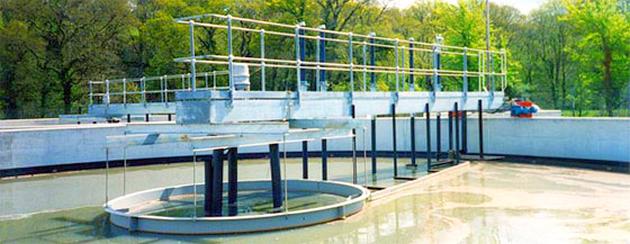
Secondary Treatment
Secondary treatment is designed to substantially degrade the biodegradable organic matter and suspended solids.
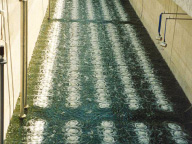
The majority of municipal plants treat the settled sewage liquor using aerobic biological processes.
This pollution mainly derived from human waste, food waste, soaps, detergent etc.
To be effective, the biota requires both oxygen and food to live. The bacteria and protozoa consume biodegradable soluble organic contaminants. (e.g. sugars, fats, organic short-chain carbon molecules, etc.) and bind much of the less soluble fractions into flocs. The final step in the secondary treatment stage is to settle out the biological floc or filter material through a secondary clarifier and to produce sewage water containing low levels of organic material and suspended matter.
Used Equipment:
- Diffuser different style for aeration.
- Mixer for mixing and avoiding of sedimentation
- Scraper different style to collect and remove settled sludge
- Scum and oil removal [Skimmer] for removal of floating material

Fine & Coarse Bubble Diffusers
Fine bubble diffusers are mainly used for oxygen transfer into biological wastewater treatment.
Mixers
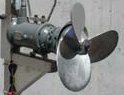 Mixers are widely used in water & wastewater treatment plants.
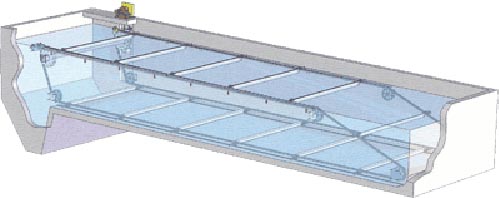
Chain Scraper
The most common chain scraper system scrapes sludge from the bottom and skims surface of the tank.
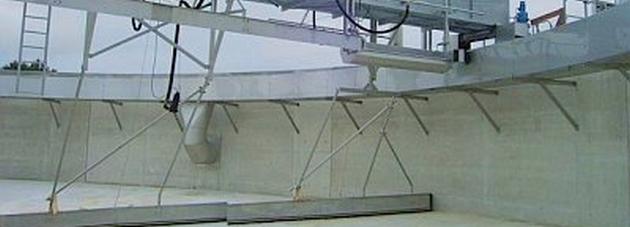
Circular Tank Scraper
Rotating Circular scrapers are designed to remove sludge and scum mainly in final settling tanks.
Longitudinal Bridge Scraper
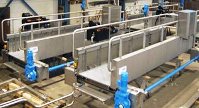 Longitudinal Bridge scrapers are designed for desludging and descuming of primary and final settling tanks and can be used as Grit chamber scrapers, sludge scrapers in the treatment plants.
Micro Filter Screen
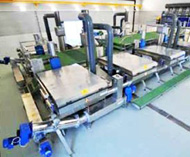 The Micro Filter Screen can relieve primary treatment burden
Grit Washer
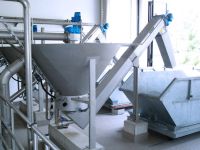 The grit washer unit consists of two basic items – grit wash tank and discharge screw.
Grit Classifier
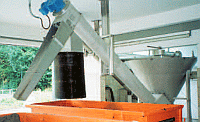 Grit classifier are used for the separation of solids from water and consisting of a funnel-shaped separation tank with a screw conveyor.
Circular Grit Trap – Vortex
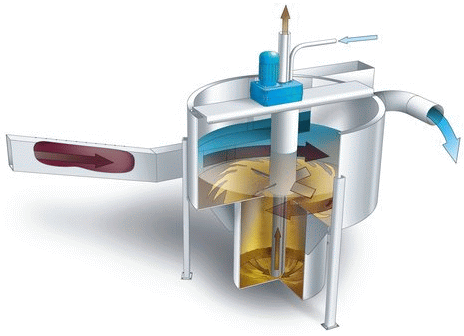 The Vortex Grit Trap is used to screen and wash sand present in water.
Longitudinal Grit Trap
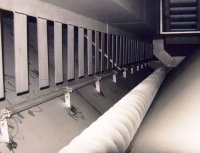 A high performance and low operating cost equipment.
Package Inlet Work
 The complete preliminary treatment of waste water in one compact plant includes
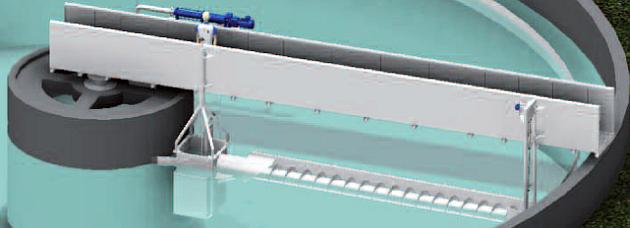
Scum Removal (Skimmer)
Floating scum and oil is gathered by a screw conveyor or “floating skimmer”.
Screw Conveyor
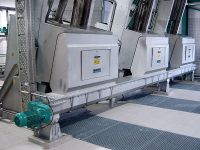
Screw conveyors are used to convey sludge or solid matter like grit or screenings.

Biogas Plant
Make Energy from Waste
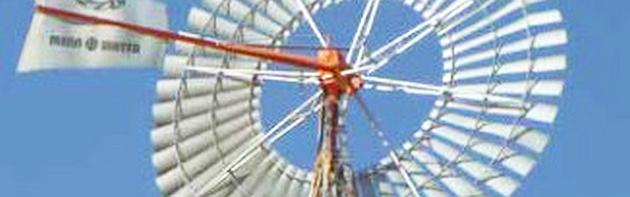
Windmill Water Pump
Through windmills its possible to pump water from a well, lake or river direct by means of wind power.

Solar Water Pump
Through solar pumps and panels it is possible to pump water from a well lake or river direct by means of solar energy.
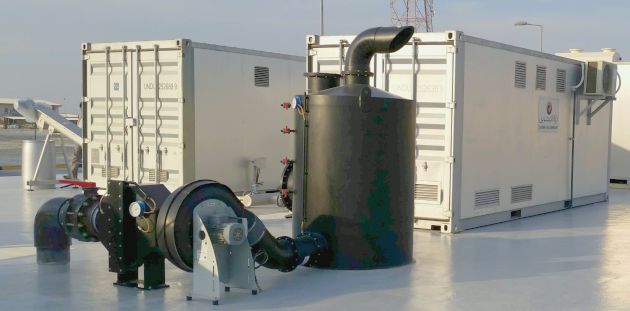
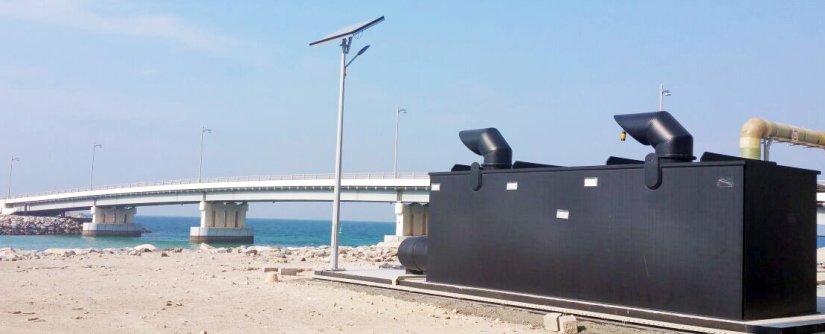
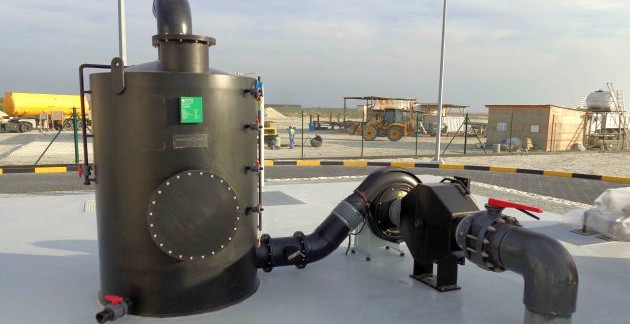
Odor Control
MENA-Water is an advocate of health and safety.
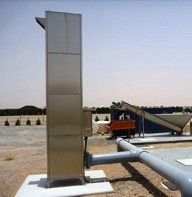 We offer process integrated robust equipments designed to control odor emanated from wastes. The major odor-generating section in a plant are influent pumping stations, grit traps and grit storage areas, primary clarifiers, sludge dewatering areas and any place where anaerobic reactions may happen.
This particular field is fully explained in products range needed to control air pollution in and around the treatment facility.
There are several technologies of odor control treatment to prevent damage to health and discomfort caused by malodor.
Types of plants: